
Deck Staining & Sealing in Nashville
Nashville's heat and humidity break down unprotected decks fast. Alan Robinson uses a professional-grade cleaning, brightening, and staining process that restores weathered wood and protects it from UV damage, moisture absorption, and mildew — the three forces that destroy Nashville decks.
15+ years • 137 verified reviews • 5x Nextdoor Favorite • Licensed & insured
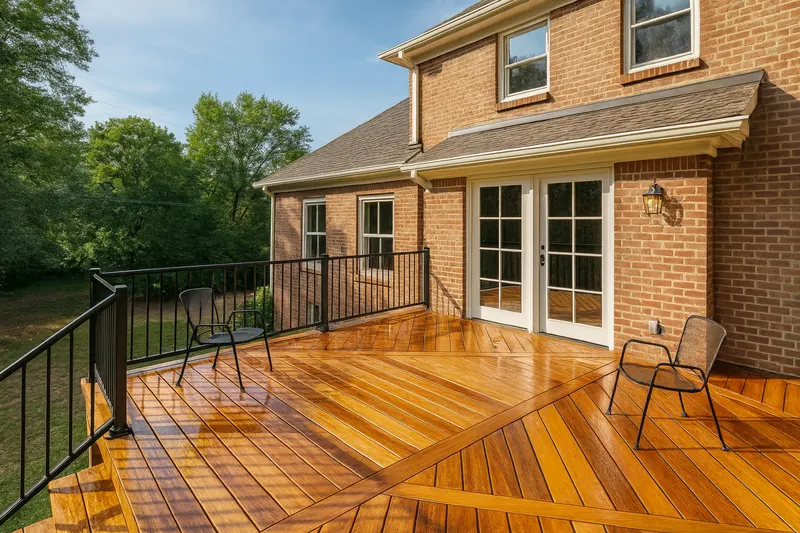
What Nashville Weather Does to an Unprotected Deck
Tennessee's climate is hard on exterior wood. Summer temperatures above 90 degrees combined with humidity above 70% create the conditions for mildew, algae, and moisture-driven wood failure. UV radiation fades and degrades the lignin in wood fibers, turning your deck gray and brittle. Spring storms dump heavy rain that saturates unprotected boards from above while ground moisture attacks from below.
Most deck "staining" jobs fail because the prep is wrong. Contractors who skip the cleaning step trap dirt and mildew under the stain. Those who use 3000+ PSI pressure washers damage the grain structure, creating a fuzzy surface that won't hold stain. And film-forming stains — the kind that sit on top of the wood — peel and crack in Nashville's humidity within a single season.
Alan's process works because it respects the wood. A sodium percarbonate wash cleans without damage. An oxalic acid brightener restores the wood's natural chemistry. Moisture meter readings confirm the wood is ready. And TWP 1500 — a penetrating stain with trans-oxide pigments — soaks deep into the grain where it actually protects, instead of forming a film that traps moisture underneath.
What Sets Professional Deck Staining Apart
Professional Cleaning & Brightening
Sodium percarbonate is a wood-safe cleaner that breaks down mildew, algae, and surface grime without the destructive force of high-pressure washing. Alan applies it at 1200-1500 PSI with a fan-tip nozzle — enough to clean thoroughly without gouging the wood grain.
Oxalic acid brightener follows the wash. This step neutralizes the cleaning solution, restores the wood's natural pH, and reverses the gray oxidation that makes decks look old. The result is clean, bright wood with open pores ready to absorb stain deeply and evenly.
Moisture Meter Verification
Stain only goes on when the wood is ready. Alan uses a pin-type moisture meter to verify readings below 15% before any stain touches the deck. This typically means a 48-hour dry window after cleaning — rushing this step is the single most common cause of premature stain failure.
Weather monitoring is part of the process. Alan checks the forecast before scheduling stain application, waiting for a 48-hour dry window with temperatures between 50-85 degrees. Your deck gets stained when conditions are right, not when the schedule says so.
TWP 1500 Penetrating Stain
TWP 1500 is a penetrating oil-based stain with trans-oxide pigments that provide UV protection deep inside the wood fiber. Unlike film-forming stains that sit on the surface and peel, TWP 1500 wears gradually and can be recoated without stripping.
The stain contains UV stabilizers, mildewcide, and water repellents that protect against all three forces that destroy Nashville decks. TWP 1500 comes in a range of natural wood tones that enhance the grain pattern while providing full protection.
Back-Brush Into Grain Technique
Spraying alone leaves stain on the surface. Alan applies stain with a flood-and-back-brush technique — saturating each board, then immediately working the stain into the grain with a brush. This manual step is what drives stain deep into the wood where it bonds and protects.
Every component gets hand attention. Railings, stairs, spindles, lattice, and structural supports are all stained individually. End grain on exposed board ends gets extra coats because end grain absorbs moisture fastest.
The Deck Staining Process
A 2-3 day process designed around proper drying and weather conditions.
Deck Assessment
Alan inspects your deck — checking board condition, existing finish, mildew levels, and structural integrity. Damaged boards are identified and quoted separately if replacement is needed.
Sodium Percarbonate Wash
A gentler, more effective alternative to high-pressure blasting. Sodium percarbonate breaks down dirt, mildew, and grayed wood fibers without damaging the grain the way a 3000 PSI pressure washer does.
Oxalic Acid Brightener
After cleaning, an oxalic acid brightener restores the wood's natural pH balance and color. This step opens the grain pores for maximum stain absorption — skipping it means stain sits on the surface instead of penetrating.
Moisture Testing
Alan checks wood moisture with a pin-type moisture meter. Stain only goes on when the reading is below 15%. Staining wet wood traps moisture underneath, causing premature failure and mildew growth.
Stain Application
TWP 1500 penetrating stain applied with a flood-and-back-brush technique. Every board gets stain worked into the grain by hand. Railings, stairs, lattice, and all structural elements are included. End grain is sealed on all exposed board ends.
Inspection & Care Guide
Final walkthrough to inspect coverage and consistency. Alan provides care recommendations for your specific stain and wood type, plus a timeline for when restaining will be needed.
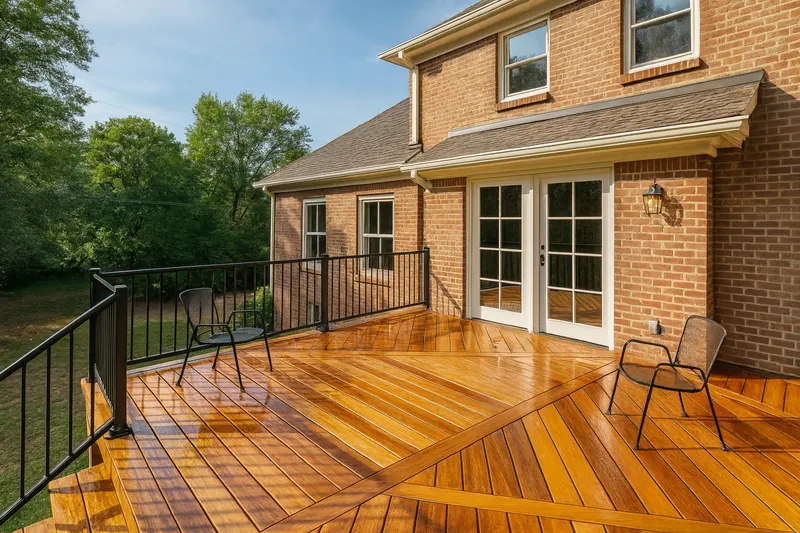
Deck Staining Questions Nashville Homeowners Ask
- How often should I stain my deck in Nashville?
- Nashville's heat and humidity mean most decks need restaining every 2-3 years with a penetrating stain like TWP 1500. Decks with heavy sun exposure may need attention every 18-24 months. Alan can assess your deck's condition during a free estimate and recommend the right schedule.
- What's the best stain for a Nashville deck?
- Alan recommends TWP 1500 (Total Wood Preservative) — a penetrating oil-based stain that soaks deep into the grain rather than forming a film on top. Film-forming stains peel in Nashville's humidity. Penetrating stain wears gradually and can be recoated without stripping.
- Do you pressure wash the deck before staining?
- Alan uses a sodium percarbonate wash — a gentler, more effective cleaning method than high-pressure blasting. High pressure can damage wood fibers and raise the grain, creating a fuzzy surface. After cleaning, an oxalic acid brightener restores the wood's natural pH and color.
- How long does deck staining take?
- Most residential decks take 2-3 days: Day 1 for cleaning and brightening, 24-48 hours of drying time, then stain application. Alan checks wood moisture with a moisture meter — stain only goes on when the reading is below 15% for proper absorption.
- How much does deck staining cost in Nashville?
- Deck staining typically ranges from $800 to $2,500 depending on deck size, condition, accessibility, and number of levels. Decks with heavy mildew buildup or old stain that needs stripping will be on the higher end. Alan provides a written estimate after seeing your deck.
- What's the difference between deck stain and deck paint?
- Stain penetrates into the wood and allows the grain to show through. Paint forms a film on top that hides the grain. In Nashville's climate, penetrating stain is the better choice — it doesn't peel, crack, or blister like deck paint does when moisture expands and contracts the wood.
- What time of year is best for deck staining in Nashville?
- Spring (April-May) and fall (September-October) are ideal — temperatures between 50-85 degrees with low humidity give stain the best conditions to absorb and cure. Alan can work in summer, but plans around morning application before peak heat.
- Why do you back-brush stain into the grain instead of just spraying?
- Spraying alone leaves stain sitting on the surface. Back-brushing works the stain deep into the wood grain where it actually protects. Alan applies stain with a combination of spray and immediate back-brush — every board gets hand attention. This is slower but produces a result that lasts significantly longer.
Deck Staining Across the Nashville Metro
Alan stains decks throughout Nashville and the surrounding communities.
Related Services
Fence Staining & Sealing
Staining your deck and fence together saves on mobilization costs. Alan uses the same professional process on both — same day scheduling available.
Learn more →Interior Painting
A refinished deck pairs well with refreshed interior spaces. Alan handles both with the same attention to prep and finish quality.
Learn more →