- How long does it take to paint the interior of a house?
- Most interior painting projects take 3-5 days depending on the size of your home and the scope of prep work. A single room typically takes 1 day. You get a specific timeline during your written estimate so you know exactly what to expect.
- What paint brands do you use for interior projects?
- We primarily use Sherwin-Williams Duration and Benjamin Moore Regal Select for walls, and Benjamin Moore Advance for trim. These premium paints offer superior coverage, durability, and washability compared to builder-grade products.
- How do you prepare walls before painting?
- Proper prep makes the difference between paint that peels in two years and paint that lasts ten. We fill nail holes and cracks, sand rough areas with 400-grit, wash walls with TSP solution to remove grease, and apply primer to bare or repaired surfaces before any color goes on.
- Do you paint ceilings too?
- Yes. Ceiling painting is included in most full interior projects. We use a flat, non-reflective ceiling paint and cut in by hand for razor-straight ceiling breaks where wall color meets ceiling — no tape lines, no wavering edges.
- How much does interior painting cost?
- Every interior is priced to the home, not to a chart — no two houses are the same. Room count, ceiling height, how much drywall repair and prep the walls need, and the paint system all shape the number. We walk the space with you, and you get a detailed written estimate with a firm number — no hidden charges. The consult is free.
- Will you repair drywall damage before painting?
- Yes. We handle drywall repair as part of prep — filling nail pops, patching cracks, skim coating damaged areas, and sanding smooth. For extensive water damage or large holes, this is addressed during the estimate so there are no surprises.
- Do you prime the whole wall or just the repairs?
- It depends on what the wall tells us. New patches and bare spots always get spot-primed, because fresh compound soaks up paint differently from the painted wall around it; skip that step and the patch shows through as a dull or shiny ghost once the room is lit. A full prime coat is for the harder cases: a big color change, stains that need sealing, walls that were never primed, or glossy old paint that a new coat wouldn't grip. We tell you which one your rooms need, and why, in the estimate.
- Why do some repainted walls show patches or blotchy spots?
- That's flashing. Repaired drywall is more porous than the surrounding paint, so if it isn't primed first the finish coat dries to a different sheen right over the patch. The same thing happens when a wall is touched up with a brush years after it was rolled. The fix is in the prep: prime every repair, keep a wet edge when rolling so sections don't overlap after they've started to dry, and check the walls under raking light before the second coat, not after the furniture is back.
- Is "paint and primer in one" the same as priming?
- No. That label means a thicker paint with better hide, which is useful on a sound wall in a similar color. It isn't a primer: it won't seal new drywall compound, block a water stain or bond to glossy trim the way a purpose-made primer does. The paint manufacturers say the same thing in their own guidance. We use self-priming paints where they belong and a real primer where they don't.
- Why do walls and trim get different paint?
- Because they live different lives. Walls get looked at; trim and doors get touched, kicked, wiped and closed against each other. Wall paint (we use Sherwin-Williams Duration or Benjamin Moore Regal Select) is made to roll out smooth and clean well. Trim and doors get an enamel, Benjamin Moore Advance on most of our projects, that dries harder, levels out brush marks, and resists blocking, which is a painted door sticking to its own frame. Putting wall paint on a door looks fine for a month and then shows every fingerprint.
- How long before I can hang pictures or scrub the walls?
- Dry to the touch and fully cured are different things. Regal Select, for example, is dry in about an hour and ready for a second coat in one to two hours, but the manufacturer says to wait two weeks before washing the walls. In practice: furniture back the same day, pictures the next day, and no scrubbing or heavy cleaning for the first couple of weeks. Humid weather and a closed-up room stretch those times, so we'll tell you what to expect for your house.
- Can you paint over old oil-based trim with a water-based enamel?
- Yes, with the right steps, and most trim in homes built before about 2005 around here is oil-based. The old gloss has to be cleaned, dulled and primed with a bonding primer before the enamel goes on; skip the primer and the new coat peels off in sheets a year later. A quick test tells us which kind of paint is already on your trim. This is one of the places where the prep is most of the job and where a low bid usually saved its money.
- What's the difference between hiring a painter and hiring an artist who paints houses?
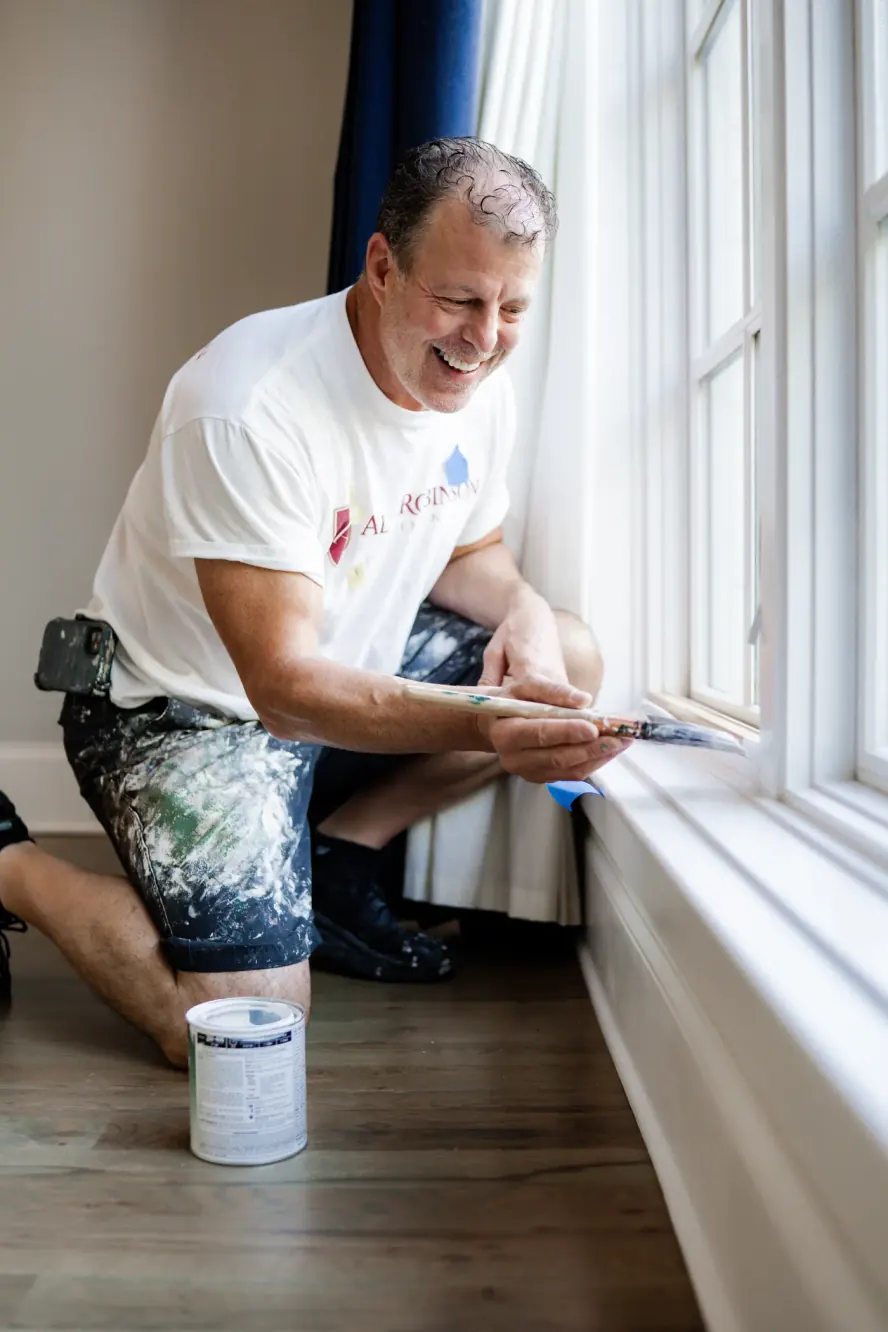
- Alan Robinson is a professional fine artist — oil on canvas, with murals in recognizable Middle Tennessee locations. That trained eye for color, composition, and detail sets the standard for every house painting project. You get razor-straight lines, thoughtful color advice, and a finish that looks intentional rather than merely covered.
- Who actually does the painting in my home?
- Alan and the team at Alan Robinson Painting stand behind every brush stroke. Alan sets the finish standard, every stage — prep, prime, and each coat — is inspected before it's called finished, and the final walkthrough happens with you. That accountability is why customers come back for their second, third, and fourth home.
- Do you offer a warranty on interior painting?
- Yes. Every interior project carries our five-year application and workmanship warranty and the manufacturer’s limited lifetime warranty on the paint, whichever package you choose. If paint we applied peels, blisters or fails because of our workmanship, we correct it at no charge. our paint and workmanship warranty →
- Which painting package do most interior projects use?
- Signature, our standard service. Nail pops, cracks and gaps are filled, sanded, caulked and primed before premium coatings go on, so the finish looks smooth and holds up to everyday living. Refresh suits a listing or a rental turnover, and Concierge adds full project management.