
If you’re looking for the most professional, thoughtful, and detail oriented painter, look no further. I originally hired another company that ended up doing a terrible job staining our fence. Alan came to our rescue and did a fantastic job from beginning to end. Additionally, Alan is a pleasure to work with. Going forward, myself (and now my in laws) will be going back to Alan for every future painting projects.
Fence Staining and Sealing, Even Color on Both Sides
A well-kept fence gives you privacy and makes the whole yard look cared for. From privacy fences to garden fences, Alan Robinson Painting uses airless spray with back-brush technique to apply TWP 100 series penetrating stain, with both sides coated, every post cap sealed, and picket-by-picket coverage that keeps the color even for years.
Walk the fence line with us and tell us the look you want, natural cedar or something deeper, and we'll test the color on your own boards before anything is committed.
Since 2007 • Licensed & insured

200+
Reviews &
Recommendations
Across Google, Nextdoor and Facebook — from homeowners who trust us again and again.





 Nextdoor Neighborhood Favorite
2020 · 2021 · 2022 · 2023 · 2025 · 2026 See what families say once the paint is dry
Recent Fence Work
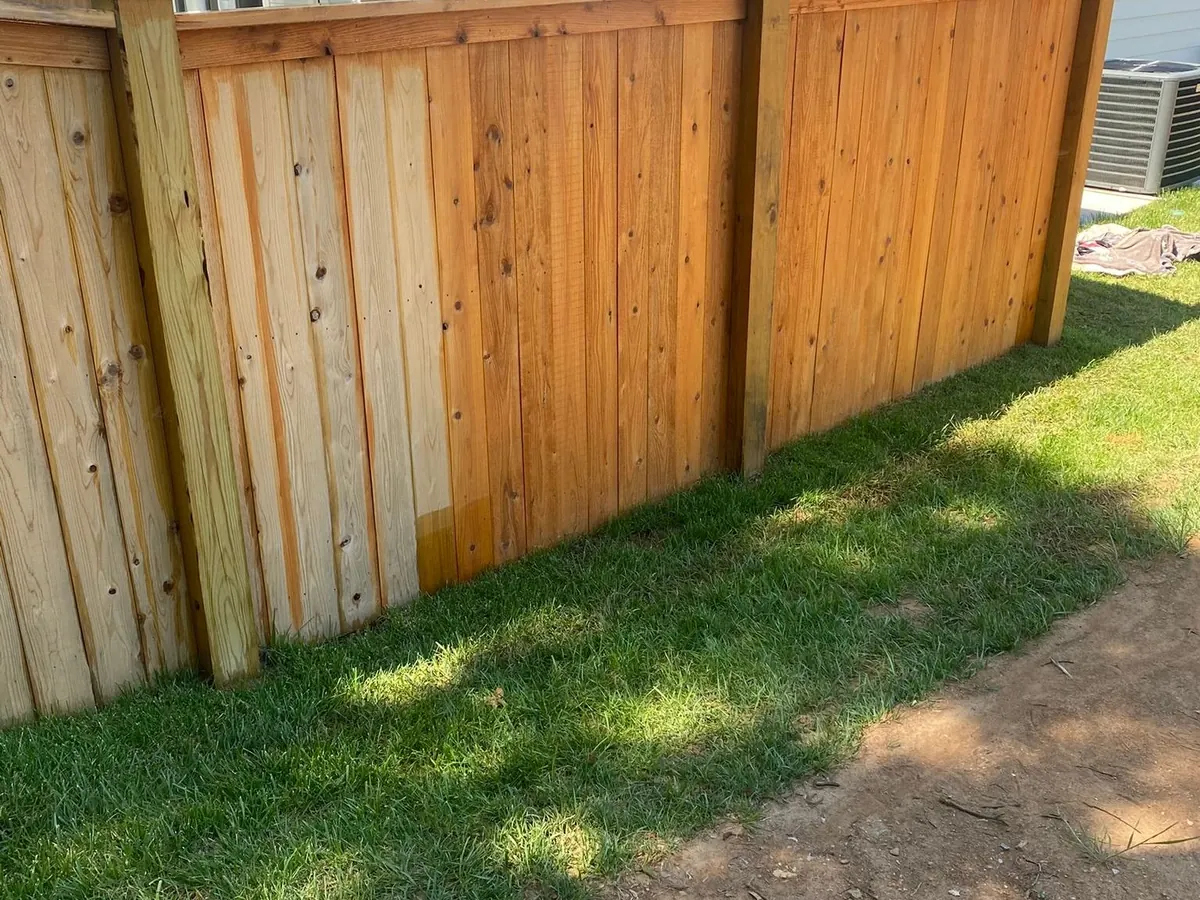
Even, warm color along the whole fence line makes a backyard feel finished. These cedar privacy fences around the Nashville area were stained through to an even tone on both faces, and the photographs are our own.
How Full Coverage Keeps a Fence Straight and Warm
A stained cedar fence keeps its warm color and stays straight for years when it's protected from what our weather does to bare wood. UV breaks down the lignin that holds the fibers together and turns cedar gray within a year, moisture makes boards swell, cup and split, and mildew settles into the shaded side. A penetrating stain is chosen to stop all three.
Coverage is what makes the color last. When only one side is stained, moisture gets in through the bare face and pushes the stain off from underneath; spraying without back-brushing leaves stain sitting on the surface; and skipping the cleaning traps dirt and mildew under the new color.
Our fence staining and fence sealing process covers every one of those points. Sodium percarbonate cleaning removes contaminants. Both sides coated eliminates the moisture imbalance that causes warping. Airless spray with immediate back-brush drives stain deep into every picket. Post caps — the most vulnerable point on the entire fence — get sealed with extra attention to end grain. The result is a fence that looks great and resists our climate for years, and a backyard you are glad to look out on.
What Professional Fence Staining Includes
A fence that looks cared for from both yards for years comes down to coverage: every picket, both sides, and the end grain where water gets in, because a fence weathers from both faces and from the top down.
Both Sides Coated — Standard
Both faces of a fence weather, so both get stained. Moisture entering from an unprotected side makes boards warp and cup and pushes the stain off from underneath, so our pricing always includes both sides.
If the neighbor's side requires access through their property, we handle the coordination directly. Professional communication, overspray shielding for adjacent landscaping, and clean work on both sides of the property line.
Airless Spray With Back-Brush
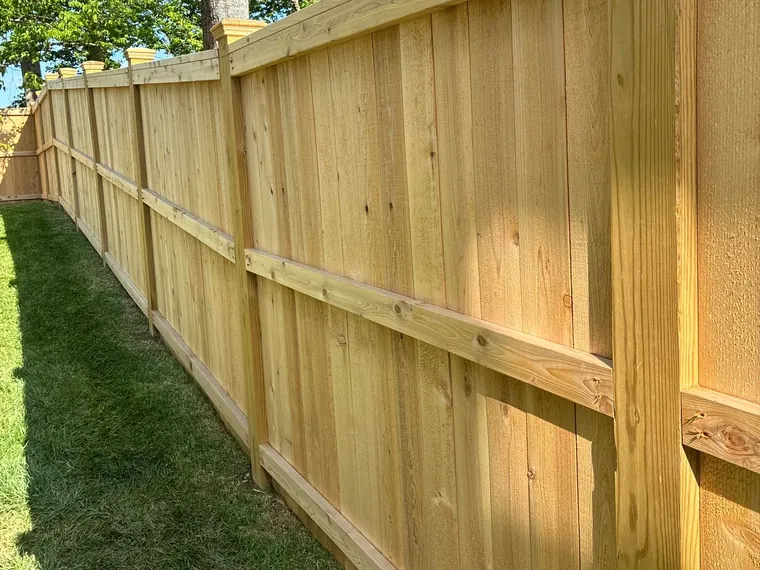
We use airless spray for speed combined with immediate back-brushing for penetration. Each section is sprayed, then brushed within seconds — driving stain into the grain, grooves, and end grain where it bonds and protects. The result is picket-by-picket coverage across all three surfaces of each board.
Horizontal rails get soaked, never merely misted. Rails collect water and are prone to rot. Stain is worked into every joint and connection point, including the underside of top rails and the top edge of bottom rails.
TWP 100 Series Penetrating Stain
TWP 100 series is formulated specifically for fencing. This penetrating oil-based stain soaks into the wood rather than forming a film on the surface. Film-forming products peel in our humidity. TWP 100 wears gradually and can be recoated without scraping or stripping.
Cedar-tone natural finish is the most popular choice, enhancing the natural warmth of cedar while adding UV protection and mildew resistance. Other options include Dark Oak, Pecan, and several additional natural wood tones. We can test colors on your fence before committing.
Post Caps Sealed
Post caps are the weakest point on any fence. The flat top surface catches every drop of rain and exposes end grain — the most absorbent part of the wood — directly to moisture. Unsealed post caps rot from the inside out, eventually compromising the structural integrity of the entire fence.
Fence sealing means extra stain on every post cap and every fastener point where water can penetrate. Ground-contact picket bottoms also get extra attention, since soil contact accelerates moisture damage from below.
Fence Types We Stain
Cedar
The area's most common fence wood. Natural rot resistance enhanced by TWP 100 stain. Best results when stained 3-6 months after installation.
Pressure-Treated Pine
Budget-friendly and widely used. Requires weathering time before staining. We test moisture levels to confirm readiness before applying stain.
Pine & Spruce
Less naturally rot-resistant, making stain protection even more critical. We recommend more frequent restaining — every 2 years — for untreated softwoods.
Our Fence Staining and Fence Sealing Process
Most residential fences are finished in 1–2 days, and you get your yard back looking cared for on both sides of the line.
1
Fence Assessment
Our fence staining company measures your fence with you, checks board condition, and identifies any rot, loose pickets, or structural issues. Repairs are quoted separately if needed — we won't stain over rotted wood.
2
Written Estimate
A detailed quote covering linear feet, fence height, both-sided staining, gate count, and any repairs. No vague numbers, no surprise costs.
3
Neighbor Coordination
If the neighbor's side of your fence requires access through their property, we coordinate directly. Professional communication and overspray shielding protect adjacent landscaping.
4
Cleaning & Prep
Sodium percarbonate wash removes dirt, mildew, and gray oxidation. Low-pressure rinse at under 1500 PSI protects cedar without damaging soft grain. Soil contact debris is cleared from bottom pickets.
5
Stain Application
Airless spray with immediate back-brush technique. Every picket gets coverage on all three surfaces — face, back, and edges. Post caps sealed with extra stain. Horizontal rails get soaked. Both sides coated is the standard.
6
Final Walkthrough
We walk the full fence line with you, checking for consistent coverage, missed spots, and clean masking around landscape features. Nothing is called finished until you've walked it with us. Care instructions and a restaining timeline are provided.
What Homeowners Say About Working With Us
5.0 · 73 Verified Google ReviewsAlan did an outstanding job for us. He repaired some damaged drywall, painted it perfectly, and also painted our new door. His work is truly excellent — everything looks clean, smooth, and professionally done.
What really stood out was how professional, fast, and respectful he was. He worked efficiently without wasting time, and when he was finished, he left the area completely clean and tidy. You could barely tell he had been there except for the beautiful results.
If you’re looking for a reliable, high-quality painter who does great work and takes pride in what he does, Alan Robinson Painting is the one to call. I wouldn’t hesitate to hire him again!
I have hired different painters over the 20+ years of home ownership and Alan is hands down the best. I truly did not find one drip or one place where the lines were not crisp and clean. He even repaired a hole in our interior door and it looks like it never was damaged. I almost want to call him an artist. He was also helpful in picking paint colors. Helping me understand how different lighting in each room will impact what the shade of paint looks like day in and day out. Super clean. Incredibly honest. Super professional!
Alan is the most thoughtful and helpful painter I’ve ever used. He thoroughly researched his job and what would be the best materials, methods and techniques well before starting the re-staining job on our front door. He kept me well informed on what would need to be done and how long the job would take to complete. Alan treated the job at hand as if he were doing it for his own home. If you want a great painter and a trustworthy person, Alan is your guy!
Fence Staining Questions Homeowners Ask
- How often should I stain my fence?
- Our climate means most wood fences need restaining every 2-3 years. Fences with heavy sun exposure on the south or west side may need attention sooner. Cedar fences in shaded areas can sometimes go 3-4 years between coats with a quality penetrating stain.
- What stain do you use on fences?
- We use TWP 100 series — a penetrating oil-based wood preservative specifically formulated for fencing. It soaks into the wood rather than forming a film, which means it wears gradually instead of peeling. Colors range from natural cedar tones to darker walnut shades.
- Do you stain both sides of the fence?
- Yes — both sides coated is the standard for every fence staining project. Staining only one side allows moisture to enter from the unprotected side, causing warping, cupping, and premature wood failure. Our price always includes both sides.
- How do you apply stain to a fence?
- We use airless spray with back-brush technique — spraying each section for speed, then immediately back-brushing for penetration. The result is picket-by-picket coverage with stain worked into every groove, end grain, and post cap. It's the most thorough method available.
- How much does fence staining cost?
- Fences vary too much for a one-size price chart, so every fence is priced to the property. We measure the full run and factor in fence height, both sides being coated, gate count, the wood's condition, and how easy each side is to reach. After we walk the fence line with you, you get a detailed written estimate with a firm number. The consult is free.
- What's the difference between fence stain and fence paint?
- Stain penetrates into the wood and preserves the natural grain appearance. Paint forms a thick film on the surface that hides the grain. In Nashville's humidity, paint on fences peels and cracks within 2-3 years. Penetrating stain wears gradually and can be recoated without scraping.
- Do you seal fence post caps?
- Yes — every post cap sealed is part of the standard process. Post caps are the most vulnerable point on a fence because they expose end grain to direct rainfall. We apply extra stain to post caps and make sure stain soaks into every joint and fastener point.
- Will staining protect my fence from rot?
- Quality penetrating stain slows moisture absorption, UV damage, and mildew growth — the three main causes of fence deterioration in Nashville. Regular restaining every 2-3 years can double or triple a fence's functional lifespan compared to leaving it unprotected.
For per-foot fence prices and the both-sides math, see what fence staining costs.
A fence stained properly, both faces where we can reach them, costs more than a one-side spray and lasts years longer. Pay for your project in fixed monthly payments through Acorn Finance. Check your options in about a minute; it won’t affect your credit score.How financing worksCheck your options (opens Acorn Finance in a new tab) can turn that into fixed monthly payments; checking your options takes about a minute and won’t affect your credit score.
Where We Stain and Seal Fences
Privacy fence, garden fence or long property line, it gets both sides coated and every post cap sealed wherever you live in Greater Nashville.
Bellevue
 A Bellevue fence is often shared with neighbors we know, which is reason enough to finish both sides of it properly.Bellevue fence staining
Brentwood
 A long Brentwood fence line is where rushed work shows. We keep the color even from the first picket to the last.Fence staining in Brentwood
Belle Meade
 In Belle Meade a fence is part of how a property presents itself from the street, so it gets the same consistency as the house behind it.Belle Meade fence staining
Franklin
 Franklin fences go from old cedar near downtown to new runs through the county. The old wood needs a conversation; the new wood mostly needs time.Fence staining and sealing in Franklin
Fairview
 A Fairview fence should keep its color for years, so both faces, the posts and the caps are sealed, not just the side you see.Fairview fence staining
Nashville
The right stain tone can make a Nashville yard feel finished. We test it on your own boards, then coat every picket evenly.
Fence staining in NashvilleServices That Pair With Fence Staining
Deck Staining & Sealing
Most clients stain both their fence and deck in the same visit. We use the same professional process on both — saving on mobilization costs.
Learn more →Interior Painting
While the fence stain cures, tackle the interior. We handle both exterior staining and interior painting with the same precision.
Learn more →