

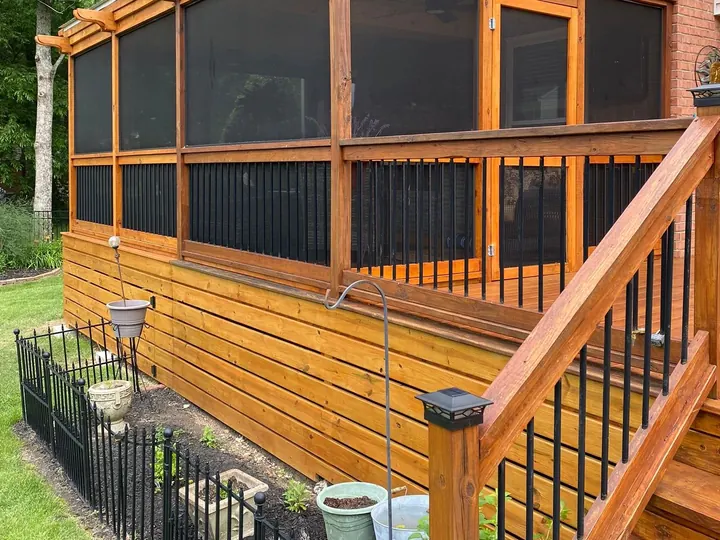
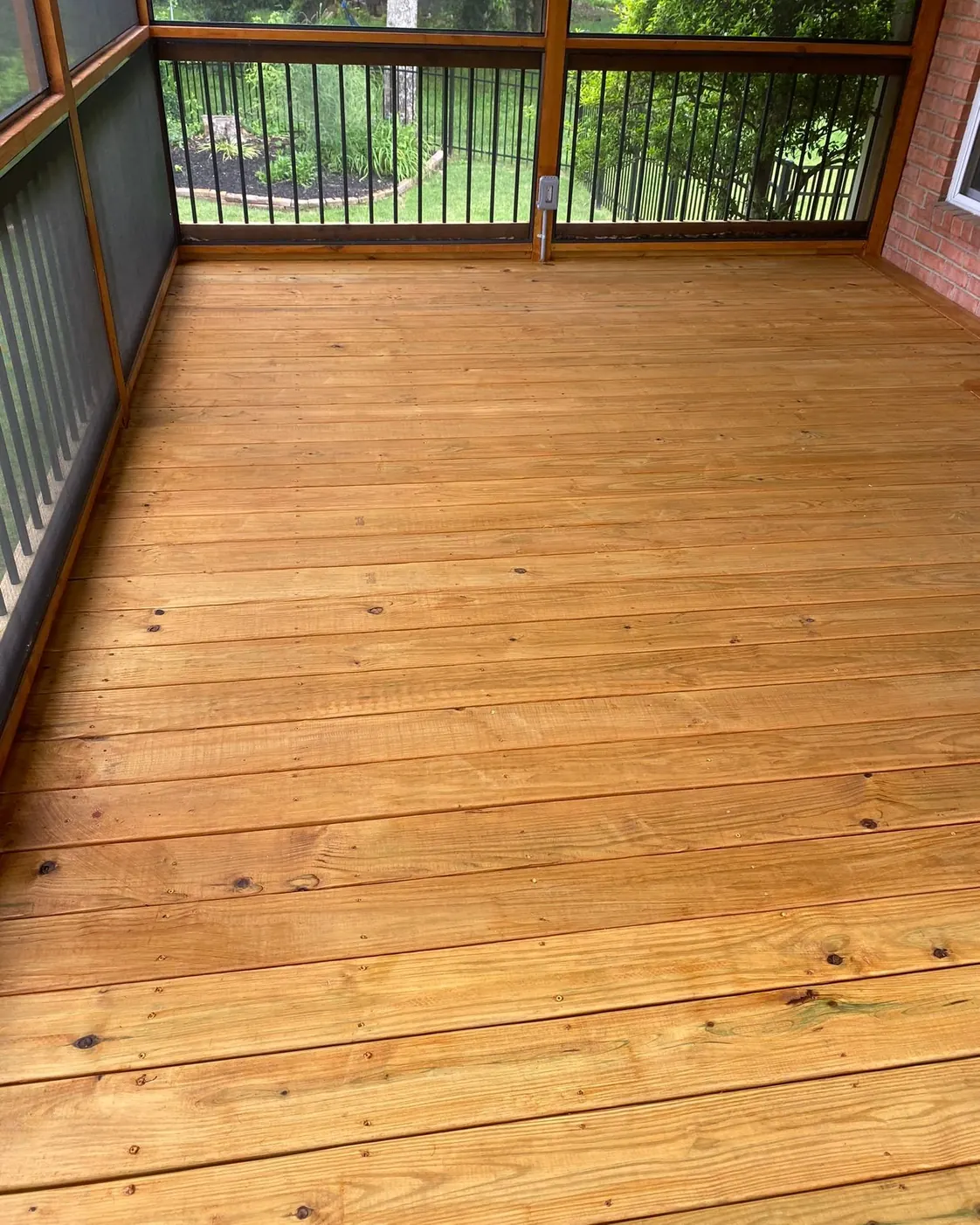
Deck boards
On a deck in open sun, the tops of the boards take the most punishment. Every board is washed and stained along its whole length, and the gaps between are cleared so rain drains through rather than sitting on the edges.
Deck staining in Fairview
For Fairview homeowners who want a deck that looks good for years, Alan Robinson Painting washes away the gray, lets the boards dry and restains them with enough pigment to hold their color in the sun. It's held to the standard of Alan Robinson, a working fine artist, as is all our work for families in Fairview.
Since 2007 • 5.0★ on Google (73 reviews) • Licensed & insured

200+
Reviews &
Recommendations
Across Google, Nextdoor and Facebook — from homeowners who trust us again and again.





 Nextdoor Neighborhood Favorite
A deck should look as good in its third summer as it does in its first: warm, even boards, smooth rails and stairs that feel good underfoot. Deck power washing and staining in Fairview is about building that kind of finish. On a deck in open sun the boards fade from honey to silver, the rails dry out and the stair treads start to check, so we clean carefully, give the wood time to dry and choose a penetrating stain with enough pigment to protect it.
Deck cleaning and staining that lasts takes a careful wash to lift the weathered layer, then enough drying time for the wood to accept a new finish, then a stain with real color in it. You can see a few of the decks we've finished before deciding what yours should look like.
Decks on bigger lots tend to be bigger themselves, and a deck only looks cared for when the long rail runs and wide stairs down to the yard match the floor.
On a deck in open sun, the tops of the boards take the most punishment. Every board is washed and stained along its whole length, and the gaps between are cleared so rain drains through rather than sitting on the edges.
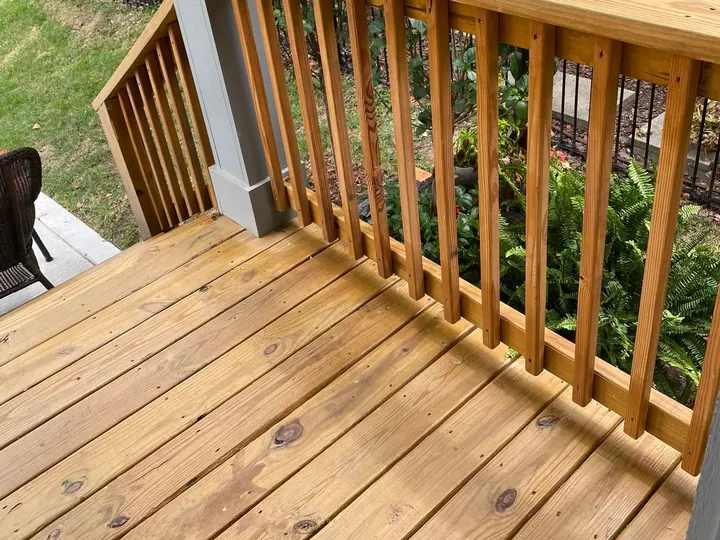
A large deck has a lot of railing, and every rail cap faces straight up at the sun. We stain the posts, the rails and each baluster, keeping the stain on the wood where metal balusters meet it.
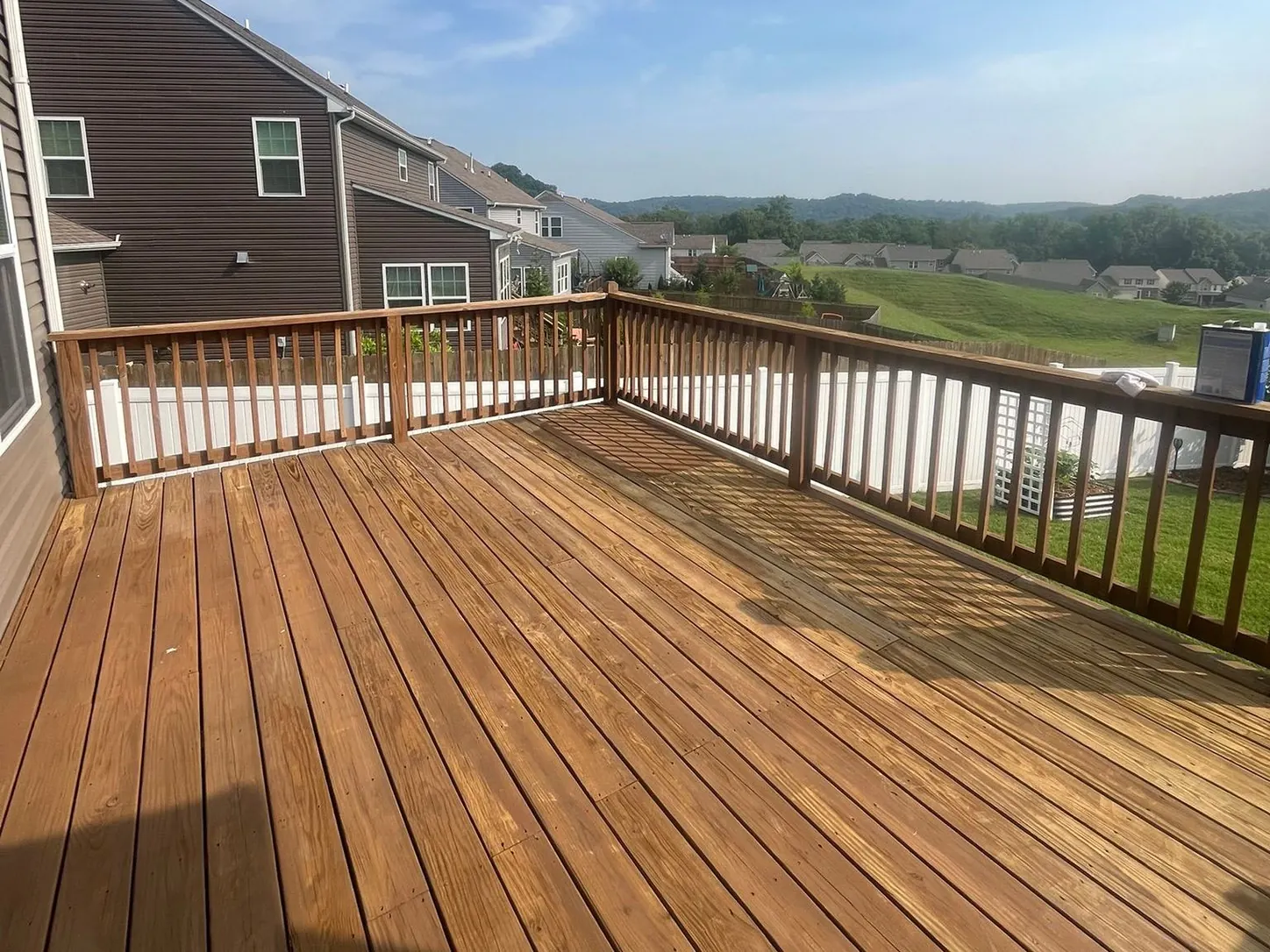
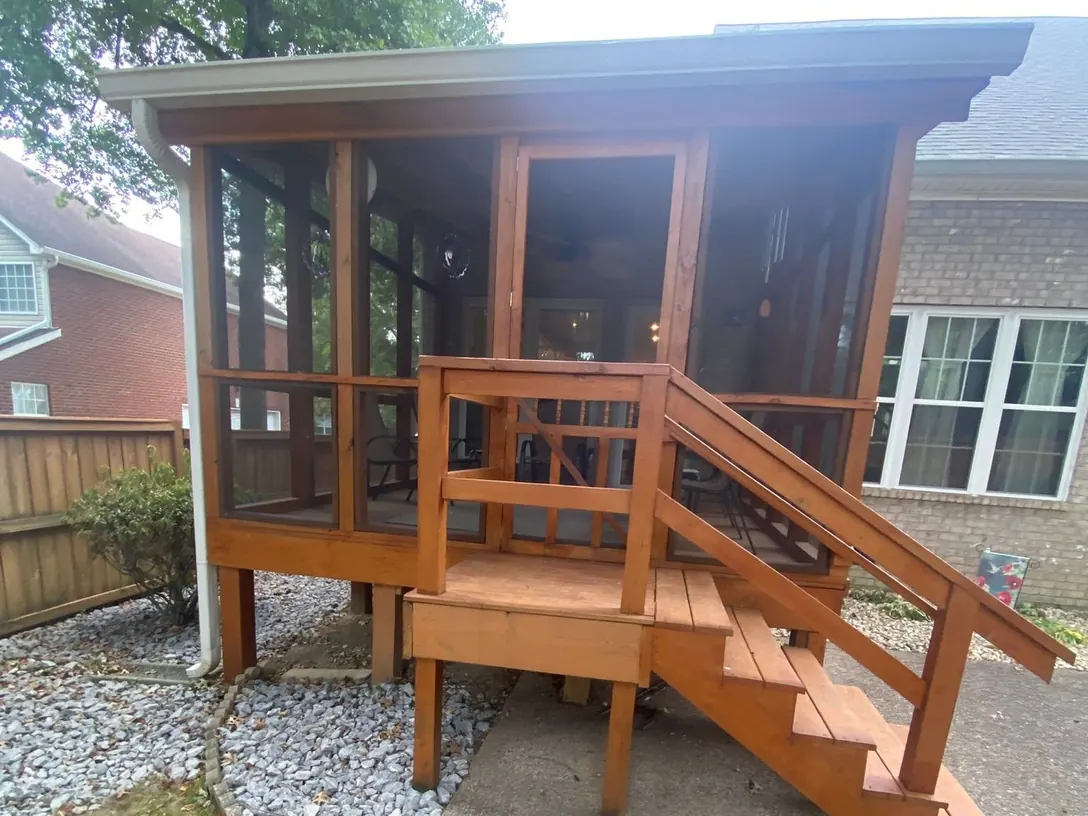
Long stairs down to the yard wear faster than the deck above. Treads, risers and stringers are all washed and stained so the whole climb matches.
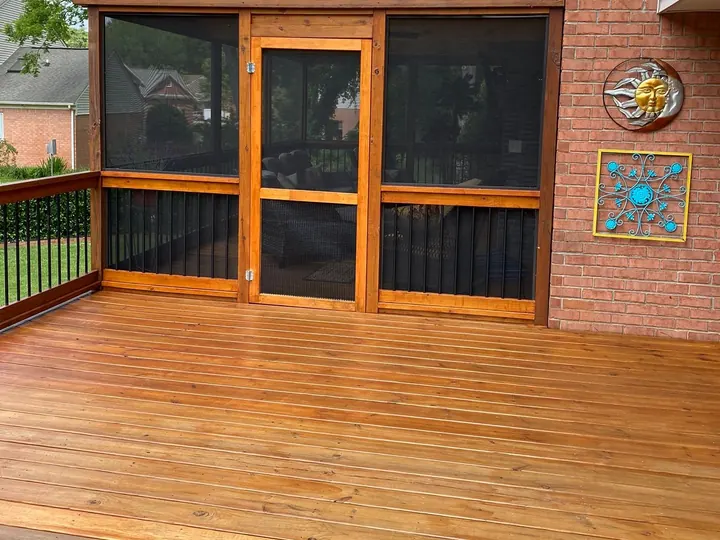
Shade structures earn their keep on a sunny lot. A pergola or a porch ceiling can be stained with the deck so the wood overhead matches the wood underfoot, the same care that goes into Alan's work on canvas.
Built-in benches and planter boxes around the edge of a big deck are included, so the whole space looks finished rather than patched.
Deck sealing keeps rain from soaking into the boards between storms. Many stains carry their own water repellent, and if a separate clear sealer suits your deck better, we'll explain why.
“Alan stained a covered pergola for us and did an awesome job.”
A Fairview deck should look good for years, not just for the first summer, and a lasting finish comes from three things done well.
Sun is harder on a deck than most people realize. Nashville-area summers bring around forty-nine days a year at ninety degrees or above, and an unshaded deck soaks up every one. Sunlight breaks down the wood's surface fibers, which is what turns it gray, and a stain with more pigment shields the wood better than a clear or lightly tinted one.
Size changes how the work is planned. On a large deck the stain has to go on in long, continuous runs so there are no lap lines, and the railings alone can take as long as the floor. If the fence along the property line is weathering too, staining the fence on your Fairview land in the same visit keeps the two in one color family.
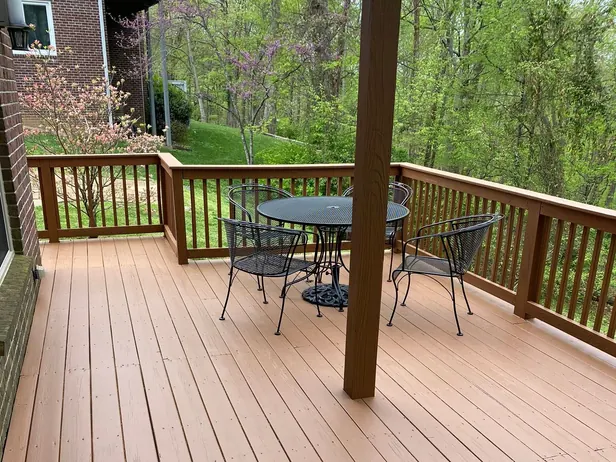
The wash matters as much as the stain. Too much pressure tears up soft wood and leaves it fuzzy, and fuzzy wood takes stain unevenly. We let a deck cleaner loosen the gray and mildew, then rinse at a pressure that cleans without carving the grain. When the house behind the deck needs attention too, exterior painting in Fairview can follow the same wash.
It starts with a look at the deck with you. The boards, the old finish, the sun exposure and any board we'd have a carpenter replace go into an itemized written estimate.
A deck cleaner loosens the weathered surface and mildew, and a careful power wash rinses it away. A brightener is an option if the color comes up uneven. Then the boards dry fully, which in open sun may not take long and after rain may take longer.
Splintered or furred spots are sanded smooth, and the siding, windows and plantings near the deck are covered.
Choose transparent, semi-transparent, semi-solid or solid; for decks in full sun, more pigment usually means longer-lasting color. It goes on when the forecast is dry, and back-brushing can work it deeper into the grain. For the months that suit outdoor finishes best, see our guide to outdoor painting weather.
When the finish has set, we walk the deck with you from the house to the bottom of the stairs, checking every rail and tread.
More on our overall approach to washing, staining and sealing decks is on the main deck page.
Alan is incredible. He has painted our living room and our deck and did amazing work with each project. He is a quick worker but still manages to deliver flawless results—not to mention he is a truly kind soul!
If you’re looking for the most professional, thoughtful, and detail oriented painter, look no further. I originally hired another company that ended up doing a terrible job staining our fence. Alan came to our rescue and did a fantastic job from beginning to end. Additionally, Alan is a pleasure to work with. Going forward, myself (and now my in laws) will be going back to Alan for every future painting projects.
Alan painted the exterior of my house with meticulous care, identified some rotten wood and connected me with a terrific carpenter to repair it, refinished two antique doors, and re-plastered a room that was a mixture of cracked plaster, wallpaper, and drywall. He gives detailed estimates upfront and works efficiently but carefully. Highly recommended.
Alan painted all trim and siding of the exterior of house. Such quality work and professionalism! He and staff did an excellent job! Always available for questions. Very Dependable and kept the job site clean after each day. We will definitely be using Alan for any future painting projects. Thanks so much Alan! 5 Star work for sure!! 🙌
Decks here can be large, so deck staining services are priced one deck at a time. These six factors matter most, and each is itemized in your estimate. Before the consult, the going rate for restaining a deck is a useful starting point.
Large decks need more washing, more stain and more hours.
Sun-damaged fibers or a failing solid stain add preparation.
Long rail runs and tall stairs down a slope add a lot of hand work.
Higher-pigment and solid stains differ in material and method.
Shade structures and built-ins add surfaces to finish.
Raised decks over sloping ground take more setup to reach safely.
Doing the deck and the fence in the same visit finishes the yard at once instead of over two seasons. Pay for your project in fixed monthly payments through Acorn Finance. Check your options in about a minute; it won’t affect your credit score.How financing worksCheck your options (opens Acorn Finance in a new tab) can turn that into fixed monthly payments; checking your options takes about a minute and won’t affect your credit score.
What Fairview homeowners often ask before a deck is washed and stained.
Have another question? Call (615) 498-3992
From Cumberland Estates and Fairview Station to The Meadows of Fairview and the homes near Otter Creek, each deck gets the same careful wash and the same patience before it is stained, so the finish lasts.
We serve the entire Fairview and 37062 area, out to White Bluff (37187).
A fresh deck often leads to the next job on the list.
Neighbors a short drive away get the same process.