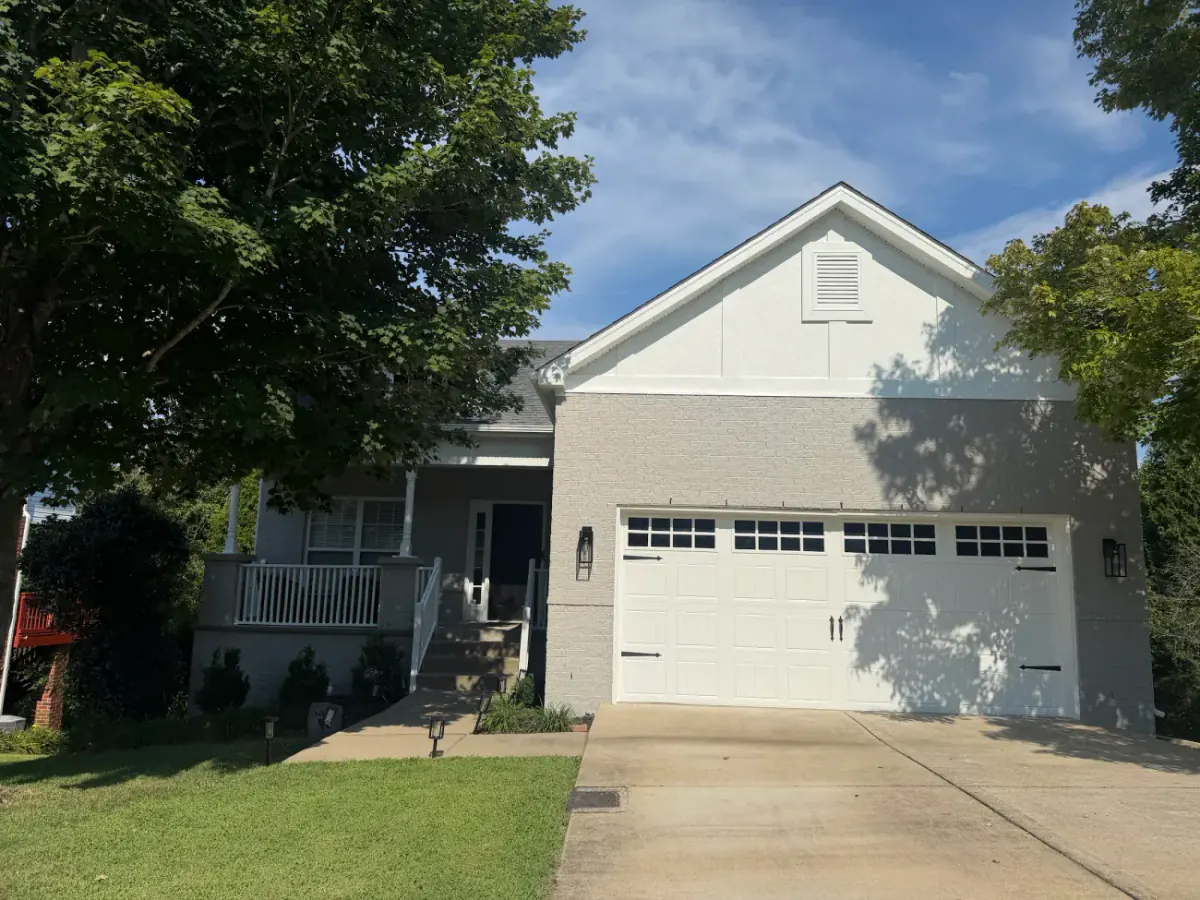
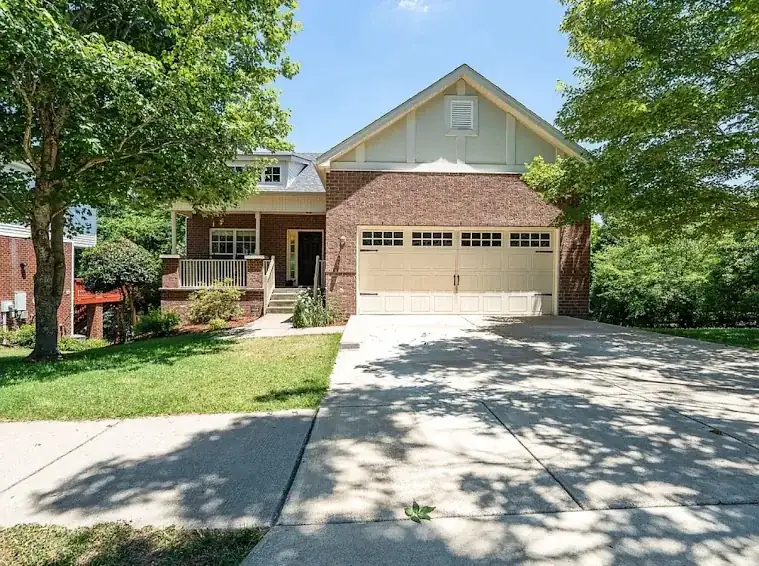
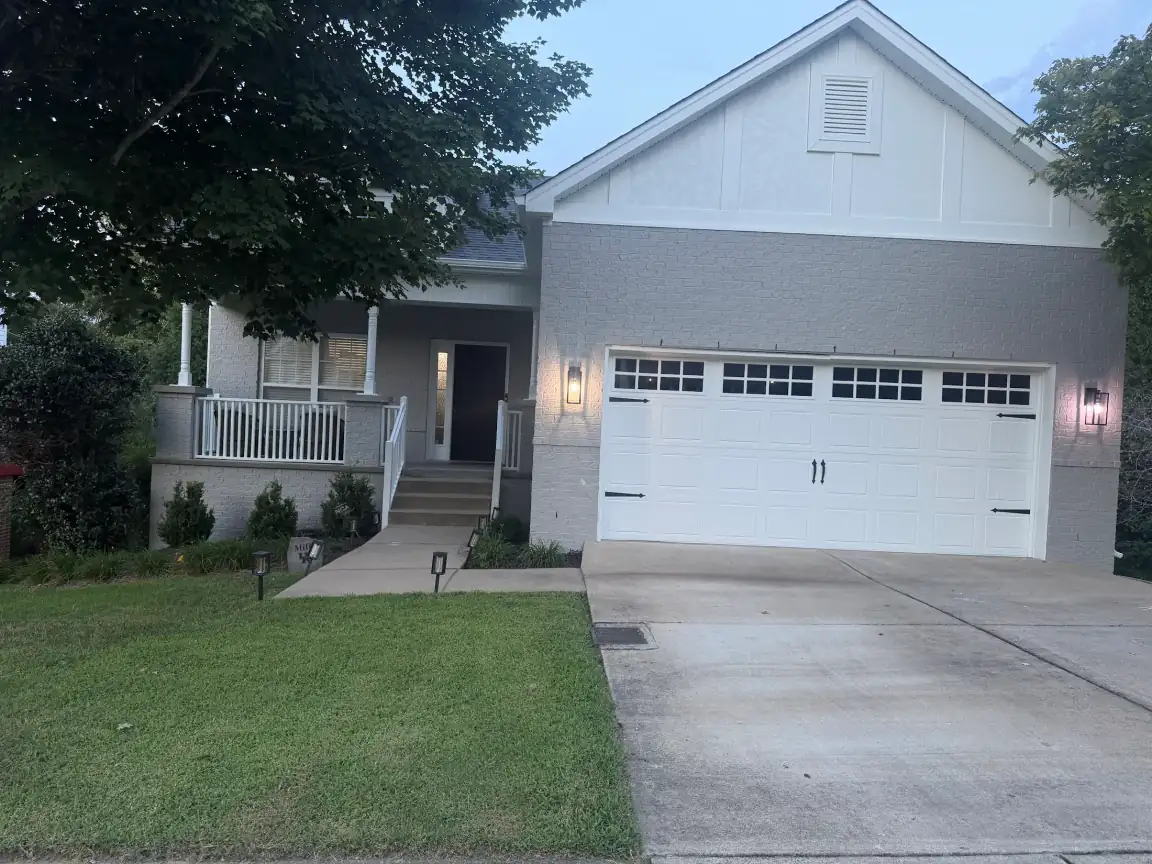
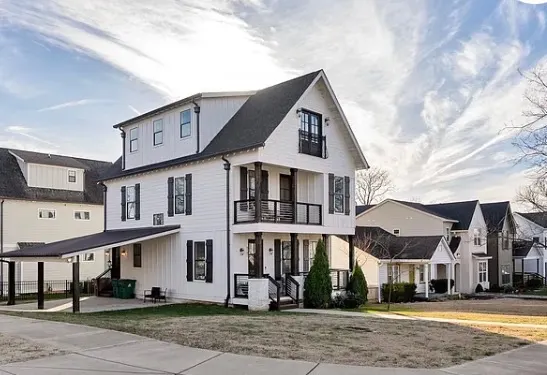
- What does exterior house painting actually cost?
- There's no price chart for exteriors, because no two houses are the same — each one is priced to the home. Square footage, stories and access, substrate (wood, fiber-cement, brick, or stucco), and the amount of scrape-and-sand and carpentry prep are what move the number. We walk the property with you, and you get a detailed written estimate with a firm number, no vague line items. The consult is free.
- When is the best season to paint a house exterior?
- Late spring through early fall is ideal, but the real answer is the dew-point / temperature window on the day, not the month. We schedule around humidity and rain, apply 100% acrylic latex within its temperature range, and won't coat a surface that's damp or about to be rained on — which is exactly why cheap jobs peel here.
- My siding has mildew and algae on the shaded side — can that be painted over?
- Not directly. Nashville's humidity and shade grow mildew and algae on north-facing walls, and painting over it just traps it. We start with a soft wash or power wash and a mildew treatment so the surface is clean and sound, then prime and coat. Skipping this step is the number-one reason exterior paint fails early here.
- Can you paint brick or stucco, and how is that different?
- Yes. Painted brick and stucco are masonry substrates — they need a breathable, masonry-appropriate system, not standard wall paint. We use a masonry primer and, where appropriate, an elastomeric coating that bridges hairline cracks while still letting moisture vapor escape, so you don't trap water behind the wall and cause spalling.
- Is it safe to paint vinyl siding, or does it warp?
- It's safe when done correctly. We use vinyl-safe paint engineered to flex with temperature swings and keep the new color equal to or lighter than the original so the siding doesn't absorb extra heat and warp. On fiber-cement and HardiePlank, we use the manufacturer-appropriate primer and a 100% acrylic topcoat.
- What prep is included before the paint goes on?
- The prep is the job. Every exterior includes a power wash or soft wash, scrape and sand of failing paint, spot-prime bare wood (and stain-blocking primer on knots), caulk gaps and seams, window glazing and caulk where needed, and mildew treatment. Soffit and fascia get the same care as the walls.
- Why don't you caulk every gap on the house?
- Because some of those gaps are doing a job. The horizontal joints where one course of lap siding overlaps the next are drainage paths; seal them and water that gets behind the siding has nowhere to go, which is how rot starts behind a paint job that looked perfect. We caulk the joints that are meant to be sealed, trim to siding, casings, penetrations, and leave the laps open. Sherwin-Williams says the same in its contractor guidance.
- Does the whole house get primed?
- Only where it needs it, and we'll show you where. Bare wood from scraping, repaired boards, rusty nail heads, knots that bleed and chalky old paint all get a primer matched to the problem: stain-blocking, bonding or rust-inhibiting. Sound, clean, previously painted siding doesn't need a full prime coat under a modern acrylic like Duration or Aura; priming it anyway adds cost without adding years. The exception is a big color change or a surface that was never primed, where the full coat earns its keep.
- What if the paint says "paint and primer in one"?
- That's a thicker paint with good hide, and on a sound surface in a similar color it does fine. It is not a primer. It won't block tannin bleeding out of cedar, seal bare wood or bond to chalky siding the way a purpose-made primer does, and the manufacturers say so in their own guidance. When a bid uses "paint and primer in one" to drop the primer line, the house is paying for it later.
- It's 75 degrees out. Why aren't you painting the south wall?
- Because the wall isn't 75 degrees. A dark south- or west-facing wall in a Tennessee afternoon can run far hotter than the air, and acrylic paint applied to a hot surface skins over before it can level and bond. The product rules are about the surface and the dew point, not the forecast: Duration shouldn't go on in direct sun, and the data sheets ask for a surface that's dry, above the minimum temperature, and a few degrees above the dew point so the coat can set before the evening damp settles on it. We work around the house with the sun, not against it.
- What happens if you find rotten wood once you start?
- We stop on that board and show you. Paint doesn't fix rot, and painting over it just hides the problem for a season. Small repairs, a short run of trim or a fascia end, are part of the job; anything larger gets a written change order with the price before we touch it, and if it's a flashing or gutter problem that's letting water in, we'll say that too, because the paint will fail again until it's fixed. Nothing outside the original scope gets done without your yes.
- Does factory-primed Hardie siding still need painting?
- Yes. Pre-primed fiber cement ships with a primer, not a finish, and James Hardie's own guidance calls for an acrylic topcoat over it. If the siding came with the color baked on (Hardie's ColorPlus line), that's a finished product and gets touched up with Hardie's own kit rather than repainted until it fades. We check which one you have before we quote it.
- How many coats, and how do you apply them?
- Two full coats of premium 100% acrylic latex — Sherwin-Williams Duration Exterior or Benjamin Moore Aura Exterior — on a properly primed surface. We back-brush to work the coating into the surface rather than just spraying it on, which is what gives an exterior finish its adhesion and lifespan.
- Who does the exterior work?
- Alan and the team at Alan Robinson Painting stand behind every brush stroke. Alan sets the finish standard his name is on, and the work is inspected at every stage — prep, prime, and both finish coats — before it's called finished. He's a professional fine artist, and his eye for line and detail sets the standard our crews hold soffit and fascia, trim, and color to, outside as well as in.
- Is there a warranty on exterior painting?
- Yes. Exterior projects carry our five-year application and workmanship warranty and the manufacturer’s limited lifetime paint warranty. Normal weathering, fading and moisture intrusion aren’t covered, which is one reason preparation matters so much outside. the warranty terms →
- Which package should I choose for an exterior?
- Most homeowners choose Signature, our standard service, because on an exterior the preparation decides how long the paint lasts. Refresh works for siding and trim that are already in good shape, often before a sale, and Concierge adds a Project Consultant who manages scheduling, color and communication.